


Poople
3.510.00 Reviews
App Specs
- Version
- 1.0.4
- Updated On
- License
- Free
- Downloads
- 10,000+
- Developer
- MsAsterisk
- Categories
- Word
- Platform
- Android
Screenshots
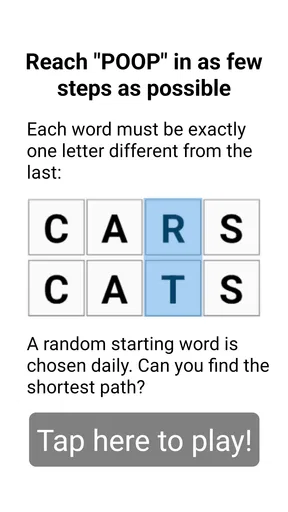
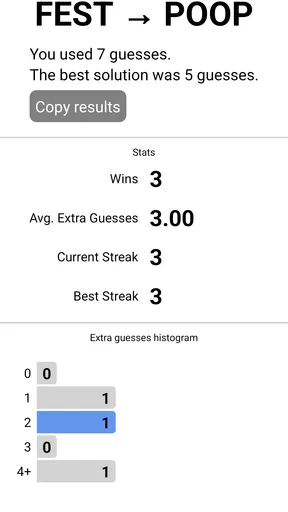
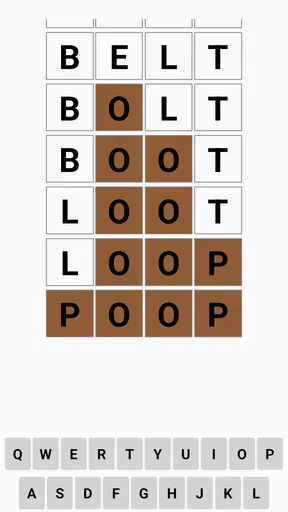
 Analysis by AppCompare
Poople is the kind of word game that gets its point across immediately: take a random four-letter word and turn it into something related to poop. That premise is childish, but it is also clear, memorable, and strangely effective as a quick distraction. I found myself approaching each round less like a traditional puzzle and more like a tiny exercise in lateral thinking, where the joke is only half the reward and the route to the joke is the real game.
Developed by MsAsterisk, this free word game sits in a very different place from serious vocabulary trainers or polished daily puzzle brands. Its store summary describes the central idea plainly, while the short store description reduces the whole identity to one playful word. That simplicity matters: you do not need a long explanation before understanding what you are supposed to do. The experience is aimed at Everyone, and its humor is deliberately silly rather than complicated or mature.
After trying it, my first impression was that the game depends heavily on whether you enjoy its particular sense of humor. If you do, the compact premise gives ordinary wordplay a comic destination. If you want deep vocabulary practice, long sessions, or a carefully layered progression system, this is probably not where I would send you. Its appeal comes from being small, direct, and unserious.
Why the first few rounds work
The strongest part of the opening experience is the immediate constraint. A random four-letter word gives you a narrow starting point, while the poop theme gives you a deliberately ridiculous target. That combination creates a useful tension: the answer needs to feel connected, but the player is also encouraged to think in terms of jokes, associations, sounds, and visual imagination rather than dictionary definitions alone.
I like that the concept does not ask me to learn a complicated control scheme. This is the sort of game I can open while waiting for a kettle to boil or during a short break between tasks. The small idea is easy to remember after closing the app, which makes it more likely that I will return when I want something lighter than a full puzzle session.
There is also a social quality to the premise. Even when playing alone, I naturally think about whether another person would understand the transformation or find it funny. That makes Poople suitable for passing a phone around, comparing interpretations, or challenging a friend to come up with a better route from the same starting word. The humor works best when the player treats the result as a shared joke rather than a formal test.
One practical tip is to avoid searching for the most obvious answer first. The funniest transformations often come from sound-alikes, loose associations, or a change in how the original word is read. I had more fun when I treated the four-letter prompt as a springboard instead of a strict vocabulary examination. That approach also reveals the game’s main trade-off: creative freedom can be entertaining, but it can feel less satisfying to anyone who expects one precise, objectively correct solution.
Worth Reading Before You Choose

Flipboard Shows What News Apps Must Do Beyond the Feed

Switching to Android Auto Means Rethinking Your Driving Routine

Google Calendar Makes a Crowded Week Easier to Manage

Ludo King Makes the Most of the Minutes Between Plans

Baby Panda World Brings Quick Play to Modern Phones, but Its Game Library Feels Busy

ESPN’s Live Game View Makes Following Close Games Easier
A visual language built around one joke
Poople’s identity is not trying to create a grand fantasy setting, a realistic city, or a detailed narrative world. Its setting is the joke itself. Everything is filtered through the idea of taking an ordinary little word and pushing it toward a deliberately gross but harmless conclusion. That gives the game a coherent tone, because the theme is never pretending to be more important than it is.
For me, that restraint is more valuable than a busy presentation would have been. A word game like this can easily lose its focus if it surrounds a simple mechanic with excessive decoration. The playful subject already supplies the visual and emotional direction. The result feels closer to a comic sketch or a pocket gag than to a conventional adventure, and that is the right scale for the concept.
The art direction also affects how I judge the word prompts. A normal four-letter word becomes funny because the game places it inside an unexpected context. The contrast between an everyday starting point and an immature destination creates the visual imagination. Even without a large cast or elaborate world-building, the player is encouraged to picture the transformation, and that mental image becomes part of the presentation.
This is a useful distinction when comparing it with other word games. A crossword, an anagram game, or a daily vocabulary challenge usually builds its mood around intelligence, discovery, or mastery. Poople instead builds its mood around mischief. It does not ask me to admire a beautiful board or become invested in a story; it asks me to accept a silly premise and see how far wordplay can carry it.
The limitation is equally clear. Players who prefer elegant typography, rich illustrations, or a strong narrative setting may find the concept visually narrow. The theme gives the game personality, but it also places a ceiling on variety. Once the central joke is understood, the lasting appeal has to come from the quality of the prompts and the player’s willingness to keep experimenting.
Sound, rhythm, and the value of a short session
The game’s mood is best understood through its pacing rather than through any grand dramatic build-up. The four-letter starting point creates a compact rhythm: see the prompt, consider possible connections, make the transformation, and enjoy the result. That loop suits the childish humor because it does not overstay the joke. A long pause between setup and payoff would make the premise feel heavier than it needs to be.
I would describe the overall rhythm as conversational. It resembles the timing of someone giving a friend a silly challenge and waiting for the answer. That makes it a good fit for brief play, especially when I want something that can provide a small mental reset without demanding a long commitment or a complicated strategy plan.
The sound and presentation should serve that rhythm rather than compete with it. What matters most here is whether the app lets the player move cleanly from prompt to idea to payoff. A word game with a comic premise needs a quick response cycle; too much interruption would weaken the punchline. Poople’s concept is strongest when the player can stay inside the thought process instead of being pulled away from it.
One way I use it is as a transition between activities. After finishing a work task, I might play briefly before moving on, because the game encourages a different kind of attention: not intense calculation, but flexible association. It is also a reasonable choice for a family setting where everyone understands the basic joke, although younger players may enjoy the silliness more than adults looking for serious educational value.
The trade-off is that a short, joke-driven rhythm may not satisfy players who want escalating tension. There is no reason to expect the same emotional curve as a word ladder with increasingly difficult stages or a competitive daily puzzle with a carefully tuned challenge. Poople’s pacing is intentionally loose and playful. That is a strength for casual use, but a weakness for anyone who wants a demanding routine.
Where the mechanics fit the mood
The central mechanic fits the theme because the restriction and the subject push in opposite directions. Four letters suggest precision, while the poop theme invites absurdity. That contrast gives the player a small creative problem: how can a compact word be redirected toward a silly result? I found that more engaging than a completely open-ended prompt because the limited starting format creates a boundary to play against.
It is important, though, not to mistake this for a conventional vocabulary workout. The game’s purpose is not simply to test spelling, definitions, or recall. Its value comes from seeing connections that may be indirect or humorous. Someone who enjoys puns and word association will probably get more from it than someone who prefers a clear right-or-wrong answer supported by formal rules.
A useful personal workflow is to make three passes. First, I look at the word literally. Then I say it aloud and consider whether its sound suggests another idea. Finally, I think about what kind of transformation would make the poop theme feel funniest rather than merely possible. This makes the game more rewarding because it turns each prompt into a small creative process instead of a rushed guess.
That workflow also highlights a subtle weakness: humor is subjective. A transformation that feels clever to me may feel forced to another player. The less objective the outcome, the more important personal taste becomes. If the game expects a particular interpretation, a player may occasionally feel that their own answer should count even when it does not match the intended direction. If it allows broader interpretation, the experience may feel more playful but less structured. Either way, this is not the same satisfaction as completing a tightly defined anagram.
For that reason, I see Poople as a companion to traditional word games rather than a replacement for them. When I want to sharpen spelling or solve a carefully balanced puzzle, I would choose a crossword, an anagram app, or a daily word challenge. When I want a quick laugh and a prompt that encourages unusual associations, this game has a clearer advantage.
The practical audience is fairly specific. It suits casual players, fans of silly humor, people who like wordplay, and anyone looking for a free distraction that can be understood immediately. It is less suitable for players who dislike bathroom humor, want a serious learning tool, or expect a substantial progression system. The Everyone age rating reflects the accessible nature of the concept, but accessibility does not mean universal appeal; the joke remains the deciding factor.
What the release details mean in everyday use
Poople is free, which makes experimenting with it an easy decision. I do not need to justify a purchase to myself before discovering whether the humor works for me. That is particularly helpful with a niche concept, because the game’s success depends more on personal taste than on a broad promise of features.
The app was released on September 20, 2025, and the current version is 1.0.4. It runs on Android 7.0 or later, so it is not limited to recent phones. In practical terms, that makes it approachable for people using an older compatible device, although the experience will still depend on how comfortably the particular phone handles the app.
Its average rating is 3.5 from around forty ratings, and it has over ten thousand installs. I would read those figures as signs of a small but real audience rather than as proof that the game will suit everyone. The modest footprint matches the focused design: this is a niche word toy, not a massive social platform or a broad entertainment package.
Those details also shape my expectations about longevity. I would install it for short bursts, keep it available for moments when I want a silly mental diversion, and avoid treating it as my only word game. That is not a criticism of the premise; it is an honest match between the scale of the idea and the kind of routine it supports.
Who should try it, and who should pass
I would recommend Poople to a friend who enjoys puns, playful challenges, and games that can be explained in one sentence. It is especially appealing if you like turning ordinary language into jokes and do not need a detailed story to stay interested. It can also work as a low-pressure group activity, because the best part may be discussing whether a proposed transformation is clever, ridiculous, or both.
I would not recommend it to someone looking for structured education. The game may encourage flexible thinking, but it is not a substitute for spelling practice, vocabulary study, or a serious language-learning course. I would also steer away players who find bathroom humor irritating, since the theme is not a small side detail that can be ignored; it is the foundation of the entire experience.
Players who want deep replayability should approach it carefully. The game can remain amusing when the prompts inspire fresh associations, but its variety depends on how much enjoyment you get from repeating the same central idea with new words. If you need new mechanics, story chapters, or increasingly complex systems to stay engaged, a larger word game will probably be a better long-term choice.
On the other hand, that narrowness can be refreshing. Poople does not ask me to track a large goal or maintain a serious performance streak. I can play it for a minute, smile at a particularly silly connection, and stop. In a mobile market full of games competing for extended attention, that small footprint feels intentional rather than incomplete.
My atmosphere verdict
What holds Poople together is the agreement between its subject, word-based mechanic, and short-session rhythm. The art direction does not need an elaborate setting because the premise supplies a comic world of its own. The sound and pacing work best when they keep the setup and payoff close together. The mechanics give the joke enough structure to become a game without turning it into a formal academic exercise.
My favorite aspect is the way the four-letter restriction encourages a different kind of thinking. I am not merely hunting for a definition or rearranging letters; I am testing how far an ordinary word can travel before it reaches a ridiculous destination. That is a small idea, but it creates a distinctive mood, and the game is more memorable because it commits to that mood instead of trying to appeal to every type of word-game player.
My main reservation is replay depth. The same focused premise that makes the first interaction so easy to understand can also limit the experience for people who need constant novelty. I would keep a more substantial puzzle app nearby for longer sessions, while using Poople as a quick comic palate cleanser. That division of roles feels fair and makes the game easier to appreciate on its own terms.
Overall, I see it as a charmingly immature word game with a clear identity. It is free, accessible to Everyone, and simple enough to pick up without preparation, but its real audience is narrower than those practical advantages suggest. If the idea of transforming a random four-letter word into a poop-related joke makes you grin rather than groan, Poople is worth trying. If that premise does nothing for you, no amount of wordplay structure will likely change your mind.
Pros
- Simple interface makes browsing and posting easy for new users.
- Encourages casual social interaction without requiring advanced setup.
- Lightweight experience suitable for quick visits and short sessions.
- Useful for discovering posts and profiles based on shared interests.
- Account features help keep personal content organized in one place.
Cons
- The user community may feel small compared with major social platforms.
- Content quality can vary significantly between posts and profiles.
- Some features may depend heavily on having active local users.
- Privacy details should be reviewed carefully before sharing personal content.
- Occasional bugs or slow loading may affect the overall browsing experience.
FAQs for Poople
What is Poople, and what can I use it for?
Poople is an app designed for users who want a simple way to access its entertainment and social features from a mobile device. Depending on the version available in your region, it may include tools for browsing content, interacting with other users, and managing personal activity. Before downloading, check the official store description because features, supported languages, and availability can vary between Android and iOS.
Is Poople free to download and use?
Poople may be available as a free download, but some features could require in-app purchases, subscriptions, or other paid options. I recommend reviewing the pricing section in Google Play or the App Store before installing it. Also check whether the app contains advertising, because free access does not always mean that every feature is available without limitations or additional costs.
Does Poople require an account or personal information?
The information required by Poople depends on how its features are structured. Some functions may be accessible immediately, while social, personalized, or synchronized features could require registration. During setup, review the requested permissions and privacy policy carefully. Avoid providing unnecessary information, and confirm how your email address, profile details, activity, and any uploaded content may be stored or shared.
Is Poople safe for children and teenagers?
Parents should check Poople’s age rating, content description, and communication features before allowing a child or teenager to use it. If the app includes user-generated content, profiles, messaging, or public interaction, younger users may encounter material or contacts that are not suitable for them. Use device-level parental controls and review privacy settings rather than relying only on the store rating.
What should I check before downloading Poople?
Before downloading Poople, verify that your device meets the minimum Android or iOS requirements and that enough storage space is available. Read recent user reviews, check the developer name, and confirm the latest update date to avoid unofficial or outdated versions. It is also worth reviewing permissions, privacy practices, subscription terms, and whether the app is supported in your country.


